There’s a Buzz in Easterhouse

BEE has grown alongside generations of young people in the heart of the community

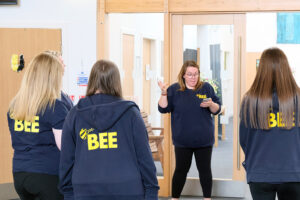
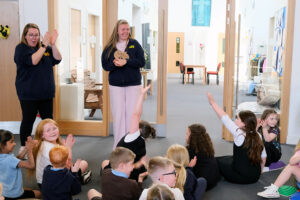
Debbie briefs her team of young leaders before their latest club gets going

There’s a Buzz in Easterhouse

If you walk in to BEE (Brighter East End) in Easterhouse, there is every chance that the youth worker running the session first came through the same doors as a primary-school child.

BEE has grown alongside generations of young people in the heart of the community. What began as an after-school club has expanded as those young people themselves asked what came next: first a youth group, then opportunities to volunteer, lead and eventually work for the organisation.

Today, that journey is at the heart of BEE. As Manager Debbie McMahon explains:

‘At the moment, I think we’ve got 12 sessional staff, not including myself, and all but one of them have been at BEE since they were primary school.’

It is a model of community-based youth work that has grown from within Easterhouse itself, and one that was recently celebrated and recognised at the YouthLink National Youth Work Awards.

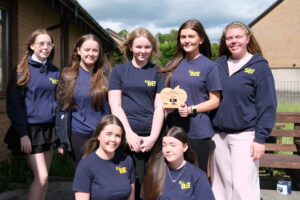
The BEE youth work team celebrate their National Youth Work Award with the younger children
The BEE team share their award win news

Growing Up with BEE

BEE’s roots stretch back to an after-school club established in 2007. As the children attending grew older, they did not simply want to leave.

‘When some of our children that had been coming were at the age where they were like, “Oh, we’re going to secondary school and we’re saying bye to you,”’ Debbie recalls, ‘they wanted a youth group, so we started the youth group. They got to the age where they were kind of too old for the youth group and then it was, “We want to be volunteers. We want to be leaders.”’

The young leaders BEE has developed tell the same story from the other side. Several began attending when they were around Primary 2 age, eventually moving through the youth group, volunteering and into paid roles. For them, BEE was simply part of growing up.

‘We always just called it club. […] It was always just somewhere to go.

‘I always remember when I was younger, seeing all the staff and being like, well, if you’re going to do that, that looks really fun. I think it was all kind of our mindset of you would grow up with BEE. Like, that’s the end goal, I think.

‘You come all the way through, and then do it for other people. We now have kids that come to the club and go, “I can’t wait till I’m old enough to volunteer, and I can work here,” which is really nice to see.’

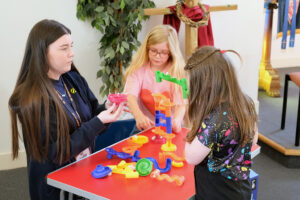
A young leader helps young people in their activities at youth club
Young leader Hollie with the younger group

More Than a Postcode

Easterhouse includes communities among the areas identified as experiencing the highest levels of multiple deprivation in Scotland. BEE does not ignore the challenges that can accompany that.

Debbie talks about families affected by poverty, drug or alcohol issues and young people who do not always have access to the same opportunities as their peers elsewhere. Increasingly, she also sees families where parents are working but still struggling to meet basic costs.

But when BEE asked young people themselves what they want to change about their community, their answer is often different.

‘For about the last eight years, the answer to that question from the young people is they would want to change what other people think about Easterhouse. Their answer wouldn’t be about the issues that they are potentially facing […] their thing would be that people look negatively.’

Easterhouse itself has changed considerably over BEE’s lifetime. Debbie remembers a time when gang identities, territorial boundaries and divisions between different areas could shape young people’s lives. She does not believe young people growing up there today experience those issues in the same way.

The challenges are real, but so too are the strengths of the community, something BEE’s young people are keen for others to see.

Growing Their Own

The Young Volunteer Programme sits at the centre of BEE’s approach. Young volunteers arrive ahead of sessions to help prepare activities and are part of the same planning structures as paid staff. BEE’s youth committee brings young volunteers and staff together to make decisions about the organisation.

‘We really try hard,’ says Debbie. ‘We are Team BEE and we do everything as Team BEE.’

Young people entering the programme take part in BEE’s 16-week Future Leaders programme, working towards a Youth Scotland Dynamic Youth Award. Once they begin volunteering, they can progress through to a Youth Scotland Youth Achievement Award.

At the time of our visit, around eight young volunteers were working towards Silver Youth Achievement Awards, with another two having completed Silver and progressed to Gold. For BEE’s current staff, Youth Scotland Awards have followed them through much of their own journey.

‘We even did them as young volunteers […] but we even did them as kids. […] And now we’ve done some as staff as well. […] We facilitate it for the younger ones.’

Their advice to other organisations wanting to become more youth-led is similarly straightforward.

‘It’s always asking the children, or the young people, what they want to do. Because at the end of the day, if they don’t want to do it, there’s no point in doing it.’

Putting a Structure Around Leadership

BEE’s relationship with Youth Scotland began through Youth Scotland Awards. After first accessing Dynamic Youth Awards through another local organisation, they became Youth Scotland members to deliver them themselves. From there, the relationship developed quickly.

As BEE looked to strengthen its youth committee and young leadership structures, Youth Scotland staff suggested iLead. Through CashBack support, around 20 staff and young volunteers went away together for an intensive residential programme, followed by further sessions back in Easterhouse. For Debbie, the value was the structure that Youth Scotland introduced:

‘We’ve always been youth led and we’ve always tried to be youth led […] but it’s really helped us put a structure to that.’

She says the programme was a “huge help” in establishing the youth committee and ensuring young people understood the ownership and responsibility they had within it. That support has continued through other training. When BEE identifies a development need across the whole team, Youth Scotland has also been able to bring training directly to Easterhouse.

‘We’ve been able to reach out to Youth Scotland and say, could you actually come and deliver it here because we’ve got 20 people wanting to take part in it […] which is really good because then it’s in our building and everybody’s familiar with it.’
I don’t think that we would have got to where we’ve got to now without the input we’ve had from Youth Scotland in the last few years.

Debbie, BEE manager

Part of the Buzz

BEE has also become a familiar presence at Youth Scotland events, particularly Big Ideas Weekend. The annual residential offers young people opportunities to meet others from across Scotland, try new activities and discover ideas they can take back into their own youth work. Debbie says:

‘They just love going, meeting new people, being part of the buzz. They’ll come back and go, “Oh my goodness, we’ve done this. Can we do this at BEE? I want to run this with the younger ones,” which is really good. You see them growing confidence lots as well.’

Often, the influence goes well beyond the weekend itself. After BEE’s young people took part in a session delivered by drugs education charity Landed at Big Ideas, the group wanted more. BEE subsequently secured funding to bring Landed to Easterhouse for an eight-week peer-training programme, with young people themselves choosing the subjects they wanted each week.

Big Ideas has created connections too. Young people from BEE have remained friends with young people they met from other parts of Scotland, arranging to meet again away from the event.

Keeping the Buzz Going

Behind the success, however, is a more difficult reality familiar to community-based youth groups across Scotland: finding the money to keep the work going.

At the beginning of this year, BEE entered January unsure whether it would still be operating beyond April. For many years, Debbie’s post had been supported by the Church of Scotland. When that arrangement ended, BEE suddenly had to find the cost of a full salary alongside its existing running costs. The organisation has since secured important support, including some multi-year funding, but Debbie estimates that it currently covers only around half of what BEE needs to operate for the year.

The team has responded in typical BEE fashion. Thirty-six people took part in the Glasgow Kiltwalk, raising around £4,000, while the organisation has returned to traditional community fundraising including bingo nights.

The pressure of finding funding has consequences. Debbie estimates she now spends around a day every week working on funding applications and reports – time that inevitably has to be found alongside managing and developing the youth work itself.

Youth Scotland small-grant funding has helped contribute towards local delivery, including support for Youth of BEE. Debbie is clear that relatively small awards do not solve the wider funding challenge, but they matter because they allow activity to happen.

It is a reminder that even strong, established youth organisations can find themselves continually piecing together different grants, fundraising and short-term support simply to sustain work that communities rely on.

National Recognition, Local Pride

Against that backdrop, BEE recently received national recognition for the very model it has spent years developing. Its Young Volunteer Programme won the Community-based Youth Work category at the National Youth Work Awards.

‘The team were absolutely buzzing. I thought, right, we need a young person to go. […] I didn’t do it. […] Natasha […] it was her who done the work alongside our young volunteer coordinator last year.’

The award recognises something that began much more simply: children who enjoyed coming to BEE and did not want their involvement to end. Over time, that became a pathway through which young people have become volunteers, leaders, staff members and mentors to those following behind.

Young leaders from BEE pose with their National Youth Work Award
BEE's award-winning young leaders

Youth Scotland as the Go-to for Support

Since joining Youth Scotland, BEE has gone on to use a wide range of membership support: Youth Scotland Awards, iLead youth leadership development, CashBack for Communities, training, events, small grants, safeguarding support and the practical infrastructure that helps a local organisation operate.

Debbie describes Youth Scotland as somewhere BEE now instinctively turns:

‘As an organisation, getting to know Youth Scotland is kind of our go-to for things like training or support or even insurance, child protection, all that kind of thing. It’s hugely helped us in developing. I don’t think that we would have got to where we’ve got to now without the input we’ve had from Youth Scotland in the last few years.’

BEE’s success belongs to the young people, staff and community who have built it over many years. Youth Scotland’s role has been to help provide some of the opportunities, tools, investment and connections that allow that work to grow.

Now another generation is already coming through. From young people arriving at ‘club’, to young volunteers, youth workers and now nationally recognised leaders, BEE’s story is one of a community growing its own.

There is plenty to be proud of in Easterhouse, and every sign that the buzz will continue.

Become a member

If you are not already part of the network of community-based youth groups like BEE, find our more about the support you could get!

Join & Renew